Africanized Bee Emergency Hot Line 702-768-1322
:
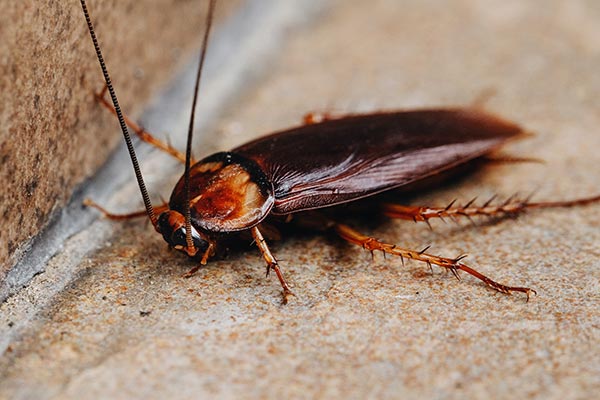
American Cockroach
(Bee Emergency Only)
Call today
382-6366
We accept the following credit cards:
Schedule an appointment today……call
702-382-6366
Poison Control Centers:
Nevada has two Poison Control Center numbers, each with a toll-free phone number that
anyone can call at any hour for information regarding proper treatment of pesticide
poisoning.
Rocky Mountain Poison Control Center
1-800-446-6179
National Poison Control Center
1-800-222-1222
Nevada has two local Poison Control Centers that anyone can call at
any hour for information regarding proper treatment of pesticide
poisoning.
Poison Control Washoe Poison Center
Humana-Sunrise Hospital Washoe Medical Center
3186 S. Maryland Pkwy 77 Pringle Way
Las Vegas, NV, 89109 Reno, NV, 89502
702-732-4989
775-982-4129
You should periodically check the phone numbers above to
insure Correctness!
West Nile Virus
Clark County Hot Line
(702)-759-1220
Introduction:
West Nile Virus (WNV) is a member of a group of viruses known as arboviruses. It affects primarily
birds, humans and horses, and to a lesser extent other domestic animals such as sheep, goats, dogs and
cats. WNV was first detected in North America in 1999 in New York. Since then, WNV has steadily moved
westward and the latest count includes California, Arizona and Utah. In Nevada, the Animal Disease
Laboratory has been conducting surveillance testing for WNV on a variety of species since March of 2001.
West Nile Virus was first detected in Nevada in crow found in Carson City on July 15th 2004.
West Nile virus like other arboviruses is spread through a bird-mosquito cycle and transmitted to
mammals, including humans, through the bite of an infected mosquito. Mosquitoes are infected by taking a
blood meal from infected birds, such as the members of the raven family. In North America, humans,
horses, and many species of birds are susceptible to infection with WNV. However, only the Corvid species
(crows, ravens, magpies, jays, and their relatives), raptors and owls are truly susceptible to WNV disease
and serve as useful sentinels of WNV activity.
According to the Center for Disease Control in Atlanta, there have been no documented cases of
person-to-person (except for blood transfusion, organ donation and trans-placental), animal-to-person, or
animal-to-animal transmission of WNV. The horse and other mammals are considered to be dead-end
hosts, meaning that the virus doesn’t multiply to high enough levels in these species to provide a source of
infection for mosquitoes.
Currently, several vaccine candidates for humans are in different stages of clinical trials. Public
availability is not expected for at least another two years. Currently there are two licensed vaccines for
horses. Clinical signs of West Nile virus infection in horses include listlessness, stumbling and
incoordination, weakness of limbs, ataxia, partial paralysis, and death. Because adequate protection
requires nearly two months, the Nevada Department of Agriculture is encouraging Nevada horse owners to
have their horses vaccinated for WNV in time for the mosquito season. The vaccination schedule consists
of two intramuscular doses administered 3-6 weeks apart, and then annual revaccination. The two
vaccines are significantly different from each other (Fort Dodge Animal Health’s West Nile-Innovator™ is a
killed whole virus vaccine, Merial’s Recombitek® Equine WNV Vaccine is a live recombinant canary pox
vaccine). Both companies have conducted vaccination trials to test if immunization with West Nile-
Innovator™ can be boostered with Merial’s Recombitek Equine WNV Vaccine. Results are contradictory.
Please contact your veterinarian for more information.